Filter by

The Hunchback of Notre-Dame
The Hunchback of Notre-Dame is a classic 1831 gothic historical novel by the renowned French author Victor Hugo (famous for Les Misérables). Set in medieval Paris in the year 1482 during the reign of King Louis XI, the novel unfolds in and around the majestic Cathedral of Notre-Dame, weaving a tragic and powerful tale of love, obsession, societal prejudice, and architectural grandeur.
- Edition
- -
- ISBN/ISSN
- -
- Collation
- -
- Series Title
- -
- Call Number
- 4.823.0040.B.U

The Hunchback of Notre-Dame
he Hunchback of Notre-Dame (Notre-Dame de Paris) is a monumental Gothic historical novel written by French author Victor Hugo and published in 1831. Set in late 15th-century Paris during the reign of Louis XI, the novel is a sweeping, deeply atmospheric tragedy that blends vivid medieval history, architectural philosophy, and social critique.
- Edition
- -
- ISBN/ISSN
- -
- Collation
- -
- Series Title
- -
- Call Number
- 4.823.0040.B.U

The Hunchback of Notre-Dame
Set in 15th-century Paris, Victor Hugo's Gothic masterpiece centers on the lives intersecting around the iconic Notre-Dame Cathedral, exploring deep themes of social injustice, appearance versus reality, unrequited love, and the cruelty of societal prejudice
- Edition
- -
- ISBN/ISSN
- -
- Collation
- -
- Series Title
- -
- Call Number
- 4.823.0040.B.U
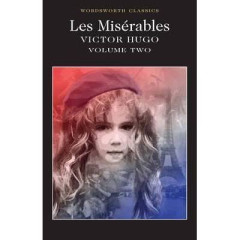
Les Miserables Volume Two
Les Misérables (Volume Two): Cosette is the second part of French author Victor Hugo's monumental masterpiece, published in 1862. Following the dark, urban poverty and tragic downfall of Fantine in the first volume, this section shifts its focus to the passage of time, a dramatic religious sanctuary, a legendary historical battle, and the quiet emergence of young love.
- Edition
- -
- ISBN/ISSN
- -
- Collation
- -
- Series Title
- -
- Call Number
- 4.823.0043.B.U

Les Miserables Volume One
Les Misérables (Volume One): Fantine is the first part of French author Victor Hugo's monumental masterpiece, published in 1862. Set in post-Napoleonic France during the 1810s and 1820s, this volume lays the emotional and philosophical foundation for the entire epic, exploring themes of poverty, systemic injustice, institutional mercy, and maternal sacrifice.
- Edition
- -
- ISBN/ISSN
- -
- Collation
- -
- Series Title
- -
- Call Number
- 4.823.0097.B.U
 Computer Science, Information & General Works
  Philosophy & Psychology
  Religion
  Social Sciences
  Language
  Pure Science
  Applied Sciences
  Art & Recreation
  Literature
  History & Geography