Filter by
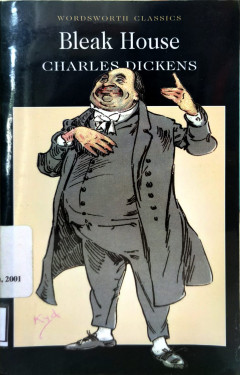
Bleak House
Widely regarded as one of Charles Dickens’s supreme literary masterpieces, Bleak House is a vast, intricately plotted state-of-the-nation novel. Blending a gripping detective mystery with a searing social satire, the story exposes the soul-destroying corruption of the British legal system, the vast chasms of Victorian class inequality, and the human cost of institutional indifference.
- Edition
- -
- ISBN/ISSN
- -
- Collation
- -
- Series Title
- -
- Call Number
- 4.823.0380.B.U
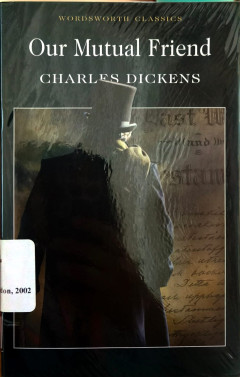
Our Mutual Friend
Published in serial installments between 1864 and 1865, Our Mutual Friend is Charles Dickens’s final completed novel. A sweeping, darkly satirical masterpiece, it explores the corrupting power of money, the suffocating grip of social class, and the resilience of human kindness against the murky, fog-choked backdrop of the River Thames and the Victorian London dust-heaps.
- Edition
- -
- ISBN/ISSN
- -
- Collation
- -
- Series Title
- -
- Call Number
- 4.823.0439.B.U
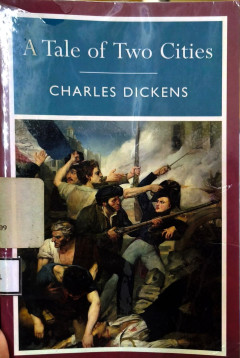
A Tale of Two Cities
Set against the tumultuous backdrop of the London and Paris before and during the French Revolution, A Tale of Two Cities is Charles Dickens’s historical masterpiece. Opening with one of the most famous lines in literature—"It was the best of times, it was the worst of times"—the novel explores themes of resurrection, sacrifice, oppression, and the destructive cycle of revenge.
- Edition
- -
- ISBN/ISSN
- -
- Collation
- -
- Series Title
- -
- Call Number
- 4.823.0070.B.U
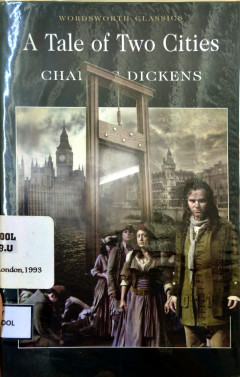
A Tale of Two Cities
A Tale of Two Cities is a historic novel written by Charles Dickens and published in 1859. Set against the backdrop of the bloody upheaval of the French Revolution, the story unfolds primarily in two cities: London and Paris. Famous for its iconic opening line—"It was the best of times, it was the worst of times"—the novel explores themes of resurrection, social injustice, sacrifice, and…
- Edition
- -
- ISBN/ISSN
- -
- Collation
- -
- Series Title
- -
- Call Number
- 4.823.0070.B.U
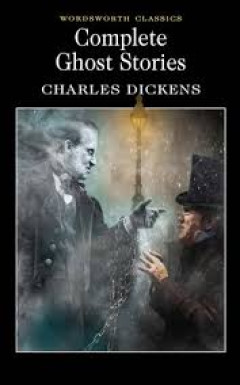
Complete Ghost Stories
The Complete Ghost Stories brings together the chilling, atmospheric, and deeply macabre short fiction of Charles Dickens. While globally celebrated for his sprawling social novels and festive cheer, Dickens was deeply fascinated by the supernatural, mesmerized by mesmerism, and possessed a lifelong love for ghost stories—particularly around the Christmas hearth. Spanning tales of psychologic…
- Edition
- -
- ISBN/ISSN
- -
- Collation
- -
- Series Title
- -
- Call Number
- 3.823.0072.B.U
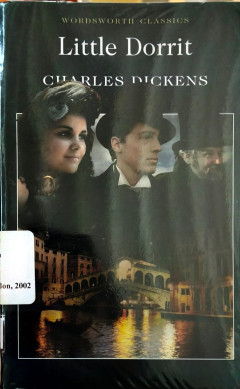
Little Dorrit
Little Dorrit is a sweeping social satire and serialized novel written by English author Charles Dickens and published between 1855 and 1857. Considered one of his darkest and most structurally ambitious masterpieces, the novel offers a scathing critique of institutional corruption, bureaucratic incompetence, and the devastating, crushing weight of debt in Victorian England.
- Edition
- -
- ISBN/ISSN
- -
- Collation
- -
- Series Title
- -
- Call Number
- 4.823.0392.B.U
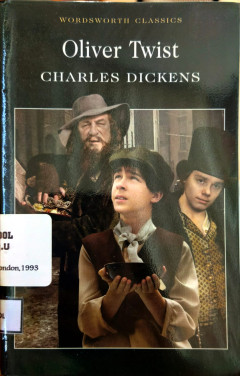
Oliver Twist
The story opens in a mid-19th-century English workhouse, where an impoverished young mother dies shortly after giving birth to an orphan boy, whom the parish beadle, Mr. Bumble, names Oliver Twist. Oliver spends the first nine years of his life in a poorly run juvenile farm, underfed and neglected, before being brought back to the workhouse.
- Edition
- -
- ISBN/ISSN
- -
- Collation
- -
- Series Title
- -
- Call Number
- 3.823.0086.B.U

The Old Curiosity Shop
The Old Curiosity Shop is Charles Dickens’s fourth novel, originally serialized in his weekly periodical Master Humphrey’s Clock. It became a massive, unprecedented cultural phenomenon in Victorian England, driving readers to frantic desperation as they awaited installments. Part gothic fairy tale, part picaresque journey, and part social satire, the novel contrasts innocent virtue against …
- Edition
- -
- ISBN/ISSN
- -
- Collation
- -
- Series Title
- -
- Call Number
- 4.823.0450.B.U
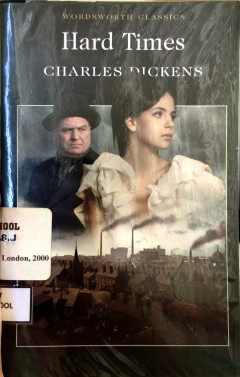
Hard Times
The story opens in a dreary classroom run by Thomas Gradgrind, a wealthy, retired merchant and a fanatical believer in utilitarianism and empirical data. He believes that children should be taught strictly through cold facts, rejecting poetry, wonder, fancy, and emotion. He raises his own two eldest children, Louisa and Tom, under this merciless philosophical system.
- Edition
- -
- ISBN/ISSN
- -
- Collation
- -
- Series Title
- -
- Call Number
- 4.823.0490.B.U
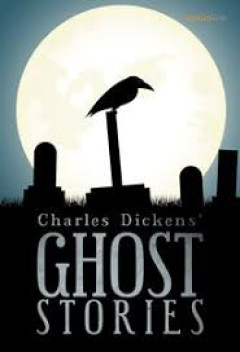
Ghost Stories
- Edition
- -
- ISBN/ISSN
- -
- Collation
- -
- Series Title
- -
- Call Number
- 3.813.0730.B.U
- Edition
- -
- ISBN/ISSN
- -
- Collation
- -
- Series Title
- -
- Call Number
- 3.813.0730.B.U
 Computer Science, Information & General Works
  Philosophy & Psychology
  Religion
  Social Sciences
  Language
  Pure Science
  Applied Sciences
  Art & Recreation
  Literature
  History & Geography