Filter by

The Hunchback of Notre-Dame
he Hunchback of Notre-Dame (Notre-Dame de Paris) is a monumental Gothic historical novel written by French author Victor Hugo and published in 1831. Set in late 15th-century Paris during the reign of Louis XI, the novel is a sweeping, deeply atmospheric tragedy that blends vivid medieval history, architectural philosophy, and social critique.
- Edition
- -
- ISBN/ISSN
- -
- Collation
- -
- Series Title
- -
- Call Number
- 4.823.0040.B.U
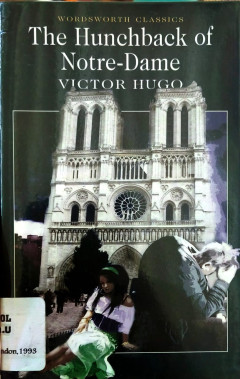
The Hunchback of Notre-Dame
Set in 15th-century Paris, Victor Hugo's Gothic masterpiece centers on the lives intersecting around the iconic Notre-Dame Cathedral, exploring deep themes of social injustice, appearance versus reality, unrequited love, and the cruelty of societal prejudice
- Edition
- -
- ISBN/ISSN
- -
- Collation
- -
- Series Title
- -
- Call Number
- 4.823.0040.B.U
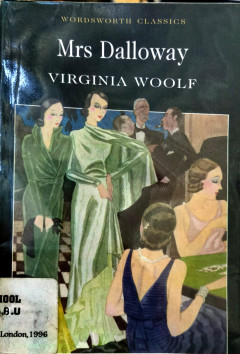
Mrs Dalloway
The novel follows Clarissa Dalloway, a well-to-do upper-class woman in her early fifties, as she walks through London preparing to host a grand party that evening. Throughout the day, external events—buying flowers, hearing a car engine backfire, striking clocks—trigger deep internal waves of memory, forcing Clarissa to reflect on her past choices: her youth in Bourton, her rejection of a p…
- Edition
- -
- ISBN/ISSN
- -
- Collation
- -
- Series Title
- -
- Call Number
- 3.823.0036.B.U

Selected Stories
Selected Stories brings together the finest short fiction of Anton Chekhov (1860–1904), the legendary Russian playwright and master of the modern short story. Eschewing grand, melodramatic plots with neat moral resolutions, Chekhov revolutionized fiction by focusing on "slices of life"—ordinary moments, subtle shifts in mood, quiet frustrations, and fleeting epiphanies. His works capture th…
- Edition
- -
- ISBN/ISSN
- -
- Collation
- -
- Series Title
- -
- Call Number
- 3.823.0282.B.U
Les Miserables Volume Two
Les Misérables (Volume Two): Cosette is the second part of French author Victor Hugo's monumental masterpiece, published in 1862. Following the dark, urban poverty and tragic downfall of Fantine in the first volume, this section shifts its focus to the passage of time, a dramatic religious sanctuary, a legendary historical battle, and the quiet emergence of young love.
- Edition
- -
- ISBN/ISSN
- -
- Collation
- -
- Series Title
- -
- Call Number
- 4.823.0043.B.U

The Mysterious Island
The story begins during the American Civil War in 1865, when a small group of Union prisoners escapes from Richmond, Virginia, by hijacking a hot-air balloon. The daring escapees include the brilliant engineer and leader Cyrus Smith, his loyal former slave Neb, the sailor Pencroff, the young orphan Harbert, and the journalist Gideon Spilett, accompanied by Pencroff's dog, Top. A ferocious hu…
- Edition
- -
- ISBN/ISSN
- -
- Collation
- -
- Series Title
- -
- Call Number
- 3.823.0060.B.U

Journey to the Centre of the Earth
Journey to the Centre of the Earth (Voyage au centre de la Terre) is a classic science fiction adventure novel by the pioneering French author Jules Verne. Renowned for its blend of rigorous 19th-century scientific curiosity and high-stakes exploration, the novel is a foundational text in the "lost world" and subterranean adventure genres, inspiring generations of explorers and science fiction …
- Edition
- -
- ISBN/ISSN
- -
- Collation
- -
- Series Title
- -
- Call Number
- 3.823.0056.B.U
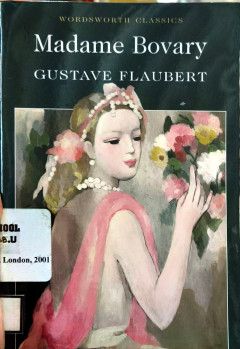
Madame Bovary
Madame Bovary is a landmark realist novel written by French author Gustave Flaubert and published in 1857. Considered a masterpiece of world literature, the novel famously pushed boundaries for its unflinching psychological realism and moral complexity, leading to an obscenity trial for Flaubert upon its release (though he was ultimately acquitted). Set in provincial 19th-century France, the…
- Edition
- -
- ISBN/ISSN
- -
- Collation
- -
- Series Title
- -
- Call Number
- 4.823.0398.B.U
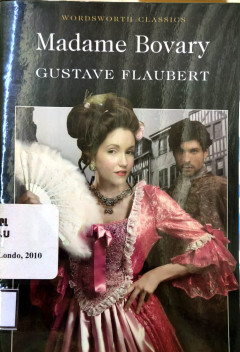
Madame Bovary
The story follows Emma Rouault, a beautiful country girl who grows up reading romantic, sentimental novels filled with passionate heroes, luxurious châteaux, and sweeping emotional highs. When she marries Charles Bovary, a well-meaning but dull and unimaginative country doctor, Emma expects her marriage to instantly transport her into that glamorous, transcendent fantasy world. Instead, rea…
- Edition
- -
- ISBN/ISSN
- -
- Collation
- -
- Series Title
- -
- Call Number
- 4.823.0398.B.U

Les Miserables Volume One
Les Misérables (Volume One): Fantine is the first part of French author Victor Hugo's monumental masterpiece, published in 1862. Set in post-Napoleonic France during the 1810s and 1820s, this volume lays the emotional and philosophical foundation for the entire epic, exploring themes of poverty, systemic injustice, institutional mercy, and maternal sacrifice.
- Edition
- -
- ISBN/ISSN
- -
- Collation
- -
- Series Title
- -
- Call Number
- 4.823.0097.B.U
 Computer Science, Information & General Works
  Philosophy & Psychology
  Religion
  Social Sciences
  Language
  Pure Science
  Applied Sciences
  Art & Recreation
  Literature
  History & Geography