Filter by

Erlangga X-press AKM Asesmen Kompetensi Minimum Numerasi untuk SD/MI
The Erlangga X-Press AKM: Numerasi untuk SD/MI is a highly focused, intensive exam-preparation workbook designed specifically to help upper elementary school students (Grades 5 and 6) master the Numeracy section of the Indonesian National Assessment (Asesmen Nasional / ANBK). Published by Penerbit Erlangga, this book aligns precisely with the framework set by the Ministry of Education's Center …
- Edition
- -
- ISBN/ISSN
- -
- Collation
- -
- Series Title
- -
- Call Number
- 2.371.3.0001.C.U

IPAS Ilmu Pengetahuan Alam & Sosial 4 SD/MI Kelas IV Kurikulum Merdeka
At nine to ten years old, fourth graders are transitioning from simple observation to structured, analytical scientific inquiry and civic awareness. The textbook addresses this developmental milestone by adopting a problem-based, inquiry-led, and context-driven pedagogical model that supports the Profil Pelajar Pancasila. Rather than memorizing abstract definitions, students are treated as y…
- Edition
- -
- ISBN/ISSN
- -
- Collation
- -
- Series Title
- -
- Call Number
- 2.507.0090.C.R
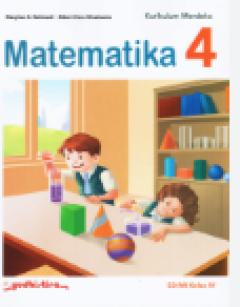
Matematika 4 SD/MI Kelas IV Kurikulum Merdeka
- Edition
- -
- ISBN/ISSN
- -
- Collation
- -
- Series Title
- -
- Call Number
- 2.510.0172.C.R
- Edition
- -
- ISBN/ISSN
- -
- Collation
- -
- Series Title
- -
- Call Number
- 2.510.0172.C.R

Pendidikan Pancasila 4 kelas IV SD/MI Kurikulum Merdeka Edisi Revisi
At nine to ten years old, fourth graders are developing a clearer understanding of social structures, local governance, and their own civic identities. The textbook maps onto this developmental milestone by adopting a highly active, contextual, and project-based learning model. The pedagogy relies on colorful cartoon characters, neighborhood mapping exercises, and collaborative group discuss…
- Edition
- -
- ISBN/ISSN
- -
- Collation
- -
- Series Title
- -
- Call Number
- 2.323.6.0036.C.R
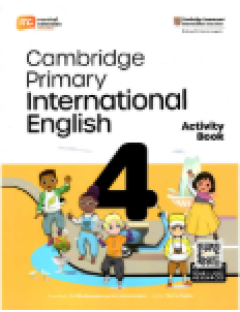
Cambridge Primary International English 4 Activity Book
In Stage 4, students are expected to move past basic sentence construction into writing complex sentences, organizing paragraphs, and analyzing an author's choice of words. The Activity Book supports this transition through a carefully scaffolded approach: Differentiated Practice: Each unit contains exercises that gradually increase in complexity—moving from Focus (identifying and matching…
- Edition
- -
- ISBN/ISSN
- -
- Collation
- -
- Series Title
- -
- Call Number
- 2.420.0158.C.R
Cambridge Primary International English 4 Student's Book
Stage 4 is a critical bridge where children move from decoding words to becoming analytical readers and expressive, deliberate writers. The textbook approaches literacy through three primary lenses: Genre-Based Exploration: Instead of learning grammar rules in isolation, students analyze how language functions within specific genres (e.g., how adjectives build tension in a mystery story vers…
- Edition
- -
- ISBN/ISSN
- -
- Collation
- -
- Series Title
- -
- Call Number
- 2.420.0157.C.R
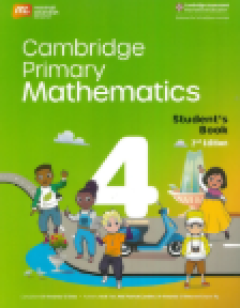
Cambridge Primary Mathematics Student's Book 2nd Edition 4
Stage 4 represents a crucial cognitive shift where students move beyond basic calculation into advanced problem-solving, pattern recognition, and mathematical reasoning. The textbook actively develops these skills using specific TWM characteristics: Specialising and Generalising: Students test specific examples to see if a rule works, and then find the overarching mathematical law. Conjec…
- Edition
- -
- ISBN/ISSN
- -
- Collation
- -
- Series Title
- -
- Call Number
- 2.510.0143.C.R
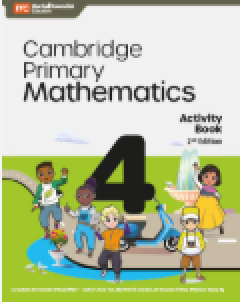
Cambridge Primary Mathematics Activity Book Second Edition 4
a practical resource designed to reinforce and extend the learning of Stage 4 mathematics concepts. The book provides a wide range of exercises and activities that support understanding of numbers, operations, fractions, geometry, measurement, data, and problem-solving. Activities are designed to be engaging, hands-on, and reflective of real-life contexts, helping students develop both conceptu…
- Edition
- -
- ISBN/ISSN
- -
- Collation
- -
- Series Title
- -
- Call Number
- 2.510.0153.C.R
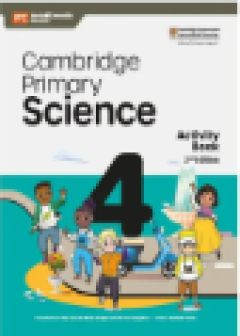
Cambridge Primary Science Activity Book Second Edition 4
In Stage 4, students transition from simply describing things to setting up fair tests and recording data accurately. The Activity Book is structured to guide students step-by-step through these skills: Scaffolded Exercises: Every lesson in the Student Book has a matching page in the Activity Book, divided into three levels of challenge: Focus (basic recall), Practice (applying concepts), an…
- Edition
- -
- ISBN/ISSN
- -
- Collation
- -
- Series Title
- -
- Call Number
- 2.507.0121.C.R
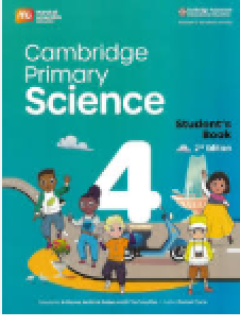
Cambridge Primary Science Student Book Second Edition 4
Stage 4 marks an important cognitive transition where children move from basic observation to structured, fair testing. The textbook introduces science as an ongoing process of questioning, modeling, and testing. Instead of just stating scientific facts, every unit explicitly integrates practical science skills: Predicting: Making data-driven guesses about what will happen. Fair Testin…
- Edition
- -
- ISBN/ISSN
- -
- Collation
- -
- Series Title
- -
- Call Number
- 2.507.0120.C.R
 Computer Science, Information & General Works
  Philosophy & Psychology
  Religion
  Social Sciences
  Language
  Pure Science
  Applied Sciences
  Art & Recreation
  Literature
  History & Geography