Filter by

EHIPASSIKO SD 2 Berdasarkan Kurikulum 2013 Edisi Revisi 2016
At seven to eight years old, Grade 2 students are actively expanding their social circles beyond the immediate family, interacting more deeply with school peers, teachers, and neighbors. The textbook addresses this milestone by shifting focus toward interpersonal harmony, respect for life, and emotional awareness. The pedagogy balances beautifully illustrated scriptural narratives with reali…
- Edition
- -
- ISBN/ISSN
- -
- Collation
- -
- Series Title
- -
- Call Number
- 2.294.3.00010.C.R

EHIPASSIKO SD 1 Berdasarkan Kurikulum 2013 Edisi Revisi 2016
Tailored specifically for first-grade students navigating their very first year of formal education, this textbook introduces Buddhist teachings through a warm, highly narrative, and child-centered lens. It simplifies profound Dhamma concepts into bite-sized, relatable life lessons that match the cognitive development of a six-year-old. The pedagogy relies heavily on colorful illustrations, …
- Edition
- -
- ISBN/ISSN
- -
- Collation
- -
- Series Title
- -
- Call Number
- 2.294.3.0009.C.R

Allah Menyertaiku Pendidikan Agama Kristen & Budi Pekerti Kelas 6 SD Kurikul…
Completing the structural theological trajectory of the primary curriculum (Grade 3: Creator, Grade 4: Sustainer, Grade 5: Savior), the Grade 6 textbook centers on the profound concept of Emmanuel or God's Constant Presence (Penyertaan Allah). Standing on the edge of adolescence, sixth graders face significant transitions: leaving behind childhood routines, preparing for national academic asses…
- Edition
- -
- ISBN/ISSN
- -
- Collation
- -
- Series Title
- -
- Call Number
- 2.230.071.0040.C.U

Allah Penyelamat Pendidikan Agama Kristen & Budi Pekerti Kelas 5 SD Kurikulum…
Following the sequential trajectory of the primary curriculum (Grade 3: Creator, Grade 4: Sustainer), the Grade 5 textbook introduces the third major theological milestone: Salvation (Penyelamatan Allah). At ten to eleven years old, fifth graders are developing a sharper moral conscience. They are increasingly aware of human flaws, peer pressures, systemic injustices, and the reality of choices…
- Edition
- -
- ISBN/ISSN
- -
- Collation
- -
- Series Title
- -
- Call Number
- 2.230.071.0036.C.U

Allah Pemelihara Pendidikan Agama Kristen & Budi Pekerti Kelas 4 SD Kurikulum…
While the Grade 3 textbook introduced God as the original Creator, the Grade 4 curriculum advances to a deeper theological milestone: Providence (Pemeliharaan Allah). At nine to ten years old, children are starting to experience a more complex world. They are more exposed to life's uncertainties, natural disasters, financial shifts within households, or personal failures. The pedagogy addres…
- Edition
- -
- ISBN/ISSN
- -
- Collation
- -
- Series Title
- -
- Call Number
- 2.230.071.0034.C.U

Allah Pencipta Pendidikan Agama Kristen & Budi Pekerti Kelas 3 SD Kurikulum …
Moving forward from the Grade 1 and 2 themes of God’s love and help, the Grade 3 curriculum focuses on awe, stewardship, and diversity under the grand theme "Allah Pencipta." At eight to nine years old, children are becoming more observant of the natural world, weather patterns, animals, and the physical differences among the people around them. The pedagogy utilizes an inquiry-based, obse…
- Edition
- -
- ISBN/ISSN
- -
- Collation
- -
- Series Title
- -
- Call Number
- 2.230.071.0039.C.U

Allah Penolongku Pendidikan Agama Kristen & Budi Pekerti Kelas 2 SD Kurikulum…
Building upon the Grade 1 theme of God's love, the Grade 2 curriculum shifts toward resilience, comfort, and active faith under the theme "Allah Penolongku." At seven to eight years old, children are expanding their social circles and experiencing small anxieties—like school challenges, getting sick, minor conflicts with friends, or fear of the dark. The pedagogy addresses these developmen…
- Edition
- -
- ISBN/ISSN
- -
- Collation
- -
- Series Title
- -
- Call Number
- 2.230.071.0037.C.U

Allah Mengasihiku Pendidikan Agama Kristen & Budi Pekerti Kelas 1 SD Kurikulu…
Designed explicitly for first graders who are just beginning their formal schooling journey, this textbook moves away from complex theological dogma. Instead, it utilizes a child-centered, experiential learning model. The overriding theme, "Allah Mengasihiku," serves as a comforting assurance that forms the bedrock of the child's spiritual identity. The pedagogy relies heavily on storytellin…
- Edition
- -
- ISBN/ISSN
- -
- Collation
- -
- Series Title
- -
- Call Number
- 2.230.071.0033.C.U
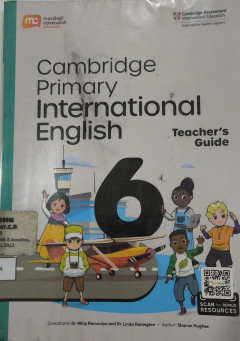
Cambridge Primary International English 6 Teacher's Guide
The primary mission of the Stage 6 Teacher's Guide is to reduce lesson-planning friction while maximizing classroom engagement. It changes the role of the teacher from a rigid lecturer into an inquiry-based facilitator. The guide treats language arts as an integrated ecosystem, showing teachers how to seamlessly connect a single reading passage to speaking exercises, granular grammar analysi…
- Edition
- -
- ISBN/ISSN
- -
- Collation
- -
- Series Title
- -
- Call Number
- 2.420.0167.C.R
Cambridge Primary International English 6 Student's Book
The core mission of the Stage 6 Learner's Book is to transform students from fluent readers into critical text analysts and expressive writers. At this final primary level, language learning shifts from basic decoding to exploring nuance, authorial intent, and international perspectives. The textbook is built around a global citizenship model, featuring a diverse array of authentic texts fro…
- Edition
- -
- ISBN/ISSN
- -
- Collation
- -
- Series Title
- -
- Call Number
- 2.420.0160.C.R
 Computer Science, Information & General Works
  Philosophy & Psychology
  Religion
  Social Sciences
  Language
  Pure Science
  Applied Sciences
  Art & Recreation
  Literature
  History & Geography