Filter by
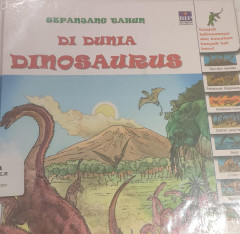
Sepanjang Tahun Di Dunia Dinosaurus
The book presents how dinosaurs may have lived, hunted, migrated, and adapted to changing seasons in the prehistoric world. Through engaging illustrations, fun facts, and simple explanations, readers learn about different dinosaur species, their habitats, food sources, and behaviors. The book also introduces basic ideas about climate, environments, and survival in the age of dinosaurs. Al…
- Edition
- -
- ISBN/ISSN
- -
- Collation
- -
- Series Title
- -
- Call Number
- 2.567.9.0004.C.R
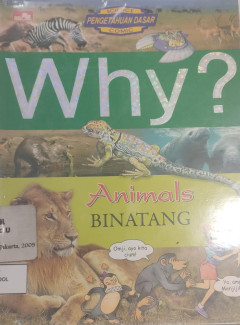
WHY ? Animals
WHY? Animals introduces young readers to the amazing diversity of animals around the world. The book answers common questions about how animals live, grow, move, and survive in different environments. Through colorful illustrations, fun facts, and simple explanations, readers learn about animal groups, habitats, diets, and unique adaptations. The book also explores how animals interact with …
- Edition
- -
- ISBN/ISSN
- -
- Collation
- -
- Series Title
- -
- Call Number
- 2.500.0028.C.U
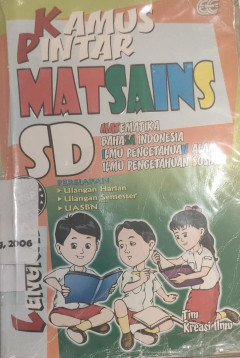
Kamus Pintar Matsains untuk SD
Smart Dictionary of Math & Science for Elementary School is a practical reference book designed to help primary students understand key concepts in mathematics and science easily. The book combines essential math and science terms in one place, making learning more efficient and enjoyable. With clear definitions, simple explanations, illustrations, and examples, students can quickly grasp im…
- Edition
- -
- ISBN/ISSN
- -
- Collation
- -
- Series Title
- -
- Call Number
- 2.503.0001.B.U

Kamus Pintar Sains Pengetahuan Alam untuk SD
The book explains important science terms in clear, simple language suitable for elementary students. With well-organized entries, helpful illustrations, and everyday examples, students can quickly learn vocabulary related to biology, physics, chemistry, and Earth science. The dictionary supports classroom lessons, homework, and independent learning. Smart Science Dictionary: Natural Scie…
- Edition
- -
- ISBN/ISSN
- -
- Collation
- -
- Series Title
- -
- Call Number
- 2.503.0002.B.U
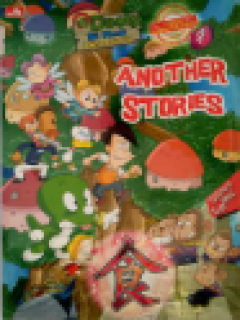
Dooly si Anak Dinosaurus 7 ANOTHER STORIES
Dooly the Baby Dinosaur 7: Another Stories presents a collection of fun and heartwarming adventures featuring Dooly and his friends. In this volume, young readers follow new stories filled with imagination, friendship, and valuable life lessons set in Dooly’s colorful prehistoric world. Through simple language, lively illustrations, and engaging plots, the book helps children develop readi…
- Edition
- -
- ISBN/ISSN
- -
- Collation
- -
- Series Title
- -
- Call Number
- 2.500.0073.C.U

Useborne Flip-Flaps What happens to Your Food
Usborne Flip-Flaps: What Happens to Your Food? is an interactive and engaging book that helps young readers discover what happens to food after we eat it. Using fun flip-flap pages, the book explains the journey of food through the human digestive system in a simple and exciting way. Through clear explanations, colorful illustrations, and lift-the-flap surprises, readers learn about the mout…
- Edition
- -
- ISBN/ISSN
- -
- Collation
- -
- Series Title
- -
- Call Number
- 2.500.0105.B.U

Sekali Baca Langsung Inget Kamus Detail IPA
The book presents detailed explanations of key concepts in natural science (IPA) using clear language that is simple to remember. With well-organized entries, illustrations, and examples, readers can quickly find and understand scientific vocabulary related to biology, physics, chemistry, and Earth science. The book supports learning, revision, and independent study. Read Once, Remember F…
- Edition
- -
- ISBN/ISSN
- -
- Collation
- -
- Series Title
- -
- Call Number
- 2.507.0110.B.U
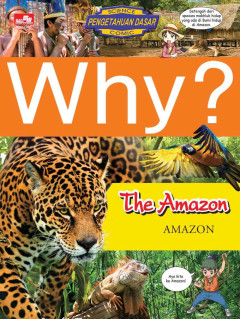
Why ? The Amazon
WHY? The Amazon introduces young readers to the wonders of the Amazon rainforest, one of the most important and diverse ecosystems on Earth. The book answers common questions about the Amazon’s climate, plants, animals, rivers, and the people who live there. Through colorful illustrations, engaging facts, and simple explanations, readers learn why the Amazon is often called the “lungs of…
- Edition
- -
- ISBN/ISSN
- -
- Collation
- -
- Series Title
- -
- Call Number
- 2.500.0110.C.R
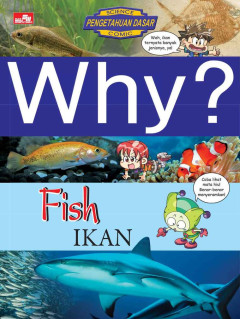
Why ? Fish
WHY? Fish introduces young readers to the fascinating world of fish and life underwater. The book answers common questions about how fish live, breathe, move, and survive in oceans, rivers, and lakes. Through colorful illustrations, fun facts, and simple explanations, readers learn about fish anatomy, fins, scales, habitats, and different types of fish. The book also explores the role of fis…
- Edition
- -
- ISBN/ISSN
- -
- Collation
- -
- Series Title
- -
- Call Number
- 2.500.0080.B.U
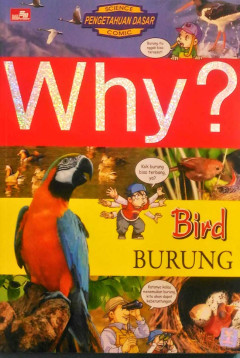
WHY ? Bird
WHY? Birds introduces young readers to the fascinating world of birds. The book answers common questions about how birds fly, sing, build nests, migrate, and survive in different environments. Through colorful illustrations, fun facts, and simple explanations, readers learn about bird anatomy, feathers, wings, beaks, and behaviors. The book also highlights the diversity of bird species and t…
- Edition
- -
- ISBN/ISSN
- -
- Collation
- -
- Series Title
- -
- Call Number
- 2.500.0026.C.U
 Computer Science, Information & General Works
  Philosophy & Psychology
  Religion
  Social Sciences
  Language
  Pure Science
  Applied Sciences
  Art & Recreation
  Literature
  History & Geography