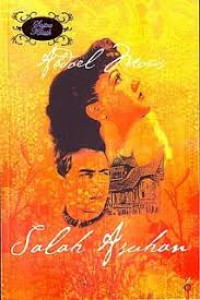
Art Original
Salah Asuhan
This abstract analyzes the socio-cultural complexities of colonial society in the Dutch East Indies through Abdoel Moeis’ seminal 1928 novel, Salah Asuhan (Wrong Upbringing). Set during the height of the ethical policy era, the narrative follows Hanafi, a Western-educated Minangkabau man who undergoes legal European assimilation (gelijkgesteld), leading to deep psychological alienation and the tragic rejection of his indigenous heritage, mother, and traditional wife, Rapiah. Through a critical literary analysis, this paper examines how the novel critiques the flaws of colonial education and the structural rigidity of both European colonial society and traditional Minangkabau adat (customary law). Hanafi’s doomed marriage to Corrie du Bus, a Eurasian woman, serves as a poignant metaphor for the impossibility of true cultural hybridity within a highly stratified racial hierarchy. Ultimately, this study demonstrates that Salah Asuhan is not merely a cautionary tale about losing one's roots, but a sophisticated critique of colonial modernity, highlighting the profound psychological displacement and identity crises experienced by the early 20th-century Indonesian intelligentsia.
Availability
Detail Information
- Series Title
-
-
- Call Number
-
4.810.0021.B.U
- Publisher
- Jakarta : BALAI PUSTAKA., 2013
- Collation
-
-
- Language
-
Indonesia
- ISBN/ISSN
-
-
- Classification
-
810
- Content Type
-
-
- Media Type
-
-
- Carrier Type
-
-
- Edition
-
-
- Subject(s)
- Specific Detail Info
-
-
- Statement of Responsibility
-
-
Other version/related
No other version available
File Attachment
Comments
You must be logged in to post a comment
 Computer Science, Information & General Works
  Philosophy & Psychology
  Religion
  Social Sciences
  Language
  Pure Science
  Applied Sciences
  Art & Recreation
  Literature
  History & Geography