Art Original
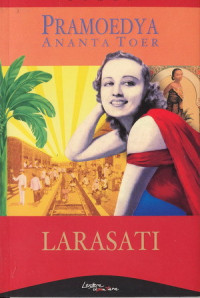
Larasati
Here is a formal academic abstract in English for Pramoedya Ananta Toer’s 1960 novel, Larasati, which shifts the perspective of the Indonesian National Revolution to the experiences of an artist on the front lines:
Abstract
Title: Art, Body, and Revolution: Female Agency and National Identity in Pramoedya Ananta Toer’s Larasati (1960)
This abstract examines the intersection of gender, artistic responsibility, and anti-colonial resistance during the Indonesian National Revolution (1945–1949) through Pramoedya Ananta Toer’s prominent 1960 novel, Larasati. The narrative centers on the eponymous protagonist, a glamorous film actress who abandons the relative safety of Dutch-occupied Jakarta to join the Republican revolutionary underground in the interiors of Java. Through a critical lens of post-colonial and feminist literary theory, this paper analyzes how Pramoedya subverts contemporary male-centric wartime tropes by positioning a woman artist as an active, conscious political agent rather than a passive victim or decorative muse. Larasati’s journey highlights the weaponization of celebrity and performance; she utilizes her public visibility and physical mobility to cross treacherous military borders, deliver critical intelligence, and maintain civilian morale. Furthermore, the novel explores the profound psychological toll and moral ambiguities of total war, illustrating how the female body becomes a site of ideological contestation, sacrifice, and survival. Ultimately, this study argues that Larasati offers a vital, localized critique of colonial hegemony, asserting that true national liberation requires the radical emancipation and intellectual integration of the female subaltern within the historical narrative.
Availability
Detail Information
- Series Title
-
-
- Call Number
-
4.810.0027.B.U
- Publisher
- Jakarta : Lentera Dipantara., 2003
- Collation
-
-
- Language
-
Indonesia
- ISBN/ISSN
-
-
- Classification
-
810
- Content Type
-
-
- Media Type
-
-
- Carrier Type
-
-
- Edition
-
-
- Subject(s)
- Specific Detail Info
-
-
- Statement of Responsibility
-
-
Other version/related
No other version available
File Attachment
Comments
You must be logged in to post a comment
 Computer Science, Information & General Works
  Philosophy & Psychology
  Religion
  Social Sciences
  Language
  Pure Science
  Applied Sciences
  Art & Recreation
  Literature
  History & Geography