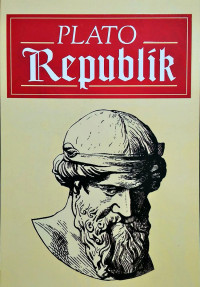
Art Original
Plato Republik
Plato's Republic (Republik), the monumental Socratic dialogue written around 375 BCE that stands as a foundational cornerstone of Western intellectual history. Structured as a series of profound philosophical conversations led by Socrates, the text embarks on a comprehensive quest to define the nature of absolute justice (dikaiosyne) and determine whether the just individual is happier than the unjust. To explore this on a macrocosmic scale, Plato constructs a theoretical, utopian city-state known as Kallipolis, systematically organizing its citizens into a rigid three-tier social hierarchy—Producers, Auxiliaries, and the elite ruling class of "Philosopher Kings"—mirroring the three parts of the human soul (appetitive, spirited, and rational).
Beyond its visionary political engineering, the Republic serves as a brilliant treatise on metaphysics, epistemology, and education. It houses some of philosophy's most celebrated allegories, most notably the Allegory of the Cave and the Analogy of the Divided Line, which illustrate the difficult human journey from the shadows of ignorance and sensory deception into the blinding light of objective truth and ultimate knowledge. For educators, advanced high school librarians, and academic curators, this timeless masterpiece offers an unparalled pedagogical resource for critical thinking and civic literacy. It provides students with a rigorous framework to analyze ethical leadership, the responsibilities of citizenship, the dangers of political corruption, and the eternal pursuit of moral integrity in society.
Availability
Detail Information
- Series Title
-
-
- Call Number
-
4.800.0004.C.U
- Publisher
- Yogyakarta : Narasi., 2015
- Collation
-
-
- Language
-
Indonesia
- ISBN/ISSN
-
-
- Classification
-
800
- Content Type
-
-
- Media Type
-
-
- Carrier Type
-
-
- Edition
-
-
- Subject(s)
- Specific Detail Info
-
-
- Statement of Responsibility
-
-
Other version/related
No other version available
File Attachment
Comments
You must be logged in to post a comment
 Computer Science, Information & General Works
  Philosophy & Psychology
  Religion
  Social Sciences
  Language
  Pure Science
  Applied Sciences
  Art & Recreation
  Literature
  History & Geography