Filter by
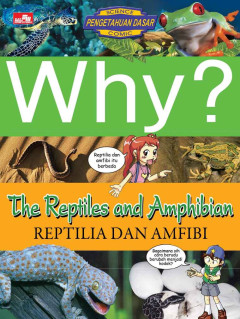
Why ? The Reptiles and Amphibion
WHY? The Reptiles and Amphibians introduces young readers to the fascinating world of reptiles and amphibians. The book explains their unique characteristics, life cycles, habitats, and the differences between these two groups of animals. Through colorful illustrations, fun facts, and simple explanations, readers learn about snakes, lizards, turtles, frogs, and salamanders, as well as how th…
- Edition
- -
- ISBN/ISSN
- -
- Collation
- -
- Series Title
- -
- Call Number
- 2.500.0079.B.U
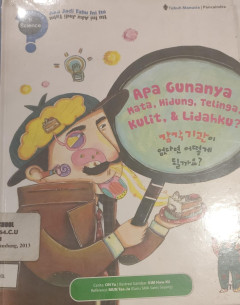
Apa Gunanya Mata, Hidung, Telinga, Kulit & Lidahku
The book explains the functions of each sense organ in a fun and easy-to-understand way. Through colorful illustrations, engaging examples, and simple explanations, readers learn how eyes help us see, ears help us hear, the nose helps us smell, the tongue helps us taste, and the skin helps us feel. The book also highlights how our senses work together to keep us safe and aware of our surroun…
- Edition
- -
- ISBN/ISSN
- -
- Collation
- -
- Series Title
- -
- Call Number
- 2.500.0054.C.U

Mengenal & Mewarnai Hewan Khas Indonesia
The book presents a variety of iconic animals, helping young readers recognize their shapes, habitats, and special characteristics. Through simple descriptions and fun coloring activities, children can learn while expressing their creativity. The book encourages fine motor skills, imagination, and early knowledge of biodiversity, while also fostering pride in Indonesia’s rich natural herit…
- Edition
- -
- ISBN/ISSN
- -
- Collation
- -
- Series Title
- -
- Call Number
- 2.590.0004.C.U
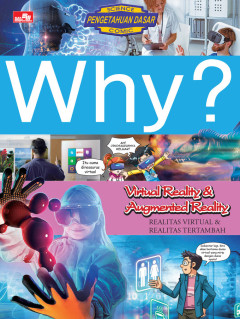
WHY ? Virtual Reality & Augmented Reality
WHY? Virtual Reality & Augmented Reality introduces young readers to the exciting world of immersive digital technologies. The book explains the differences between Virtual Reality (VR) and Augmented Reality (AR), how they work, and how they are used in everyday life. Through colorful illustrations, clear explanations, and engaging examples, readers learn how VR creates fully digital environ…
- Edition
- -
- ISBN/ISSN
- -
- Collation
- -
- Series Title
- -
- Call Number
- 2.500.0152.C.U

WHY ? The Science of Sleep
WHY? The Science of Sleep introduces young readers to the fascinating world of sleep and why it is essential for the human body and mind. The book explains what happens when we sleep, the different stages of sleep, and how sleep helps us grow, learn, and stay healthy. Through colorful illustrations, engaging examples, and simple scientific explanations, readers learn about dreams, the body c…
- Edition
- -
- ISBN/ISSN
- -
- Collation
- -
- Series Title
- -
- Call Number
- 2.500.0149.C.U
WHY ? Crime Science
WHY? Crime Science introduces young readers to the fascinating world of forensic science and how scientists solve mysteries using evidence. The book explains the methods used to investigate crimes, including fingerprinting, DNA analysis, chemical tests, and observation skills. Through colorful illustrations, engaging examples, and simple explanations, readers learn how detectives and scienti…
- Edition
- -
- ISBN/ISSN
- -
- Collation
- -
- Series Title
- -
- Call Number
- 2.500.0024.C.U
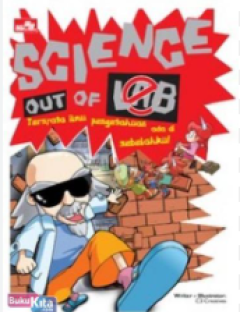
Science out of Lab
Science Out of the Lab takes young readers on an exciting journey to explore how science happens beyond the laboratory. The book shows how experiments, observations, and discoveries can occur in everyday life, nature, and real-world situations. Through colorful illustrations, engaging examples, and simple explanations, readers learn how scientists study weather, plants, animals, materials, a…
- Edition
- -
- ISBN/ISSN
- -
- Collation
- -
- Series Title
- -
- Call Number
- 2.500.0016.C.U

WHY ? Nuclear & Energy
WHY? Nuclear & Energy introduces young readers to the fascinating world of nuclear science and the different forms of energy that power our lives. The book explains how nuclear energy works, including the processes of fission and fusion, and how it is used to generate electricity safely. Through colorful illustrations, engaging examples, and simple explanations, readers learn about energy so…
- Edition
- -
- ISBN/ISSN
- -
- Collation
- -
- Series Title
- -
- Call Number
- 2.500.0022.C.U
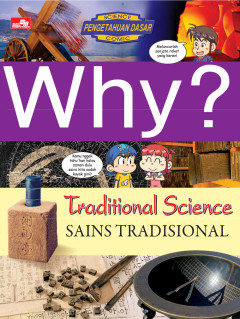
WHY ? Traditional Science
WHY? Traditional Science introduces young readers to the fascinating ways people have understood and explored the natural world throughout history. The book explains how traditional knowledge, observations, and experiments laid the foundation for modern science. Through colorful illustrations, engaging examples, and simple explanations, readers learn about ancient inventions, herbal medicine…
- Edition
- -
- ISBN/ISSN
- -
- Collation
- -
- Series Title
- -
- Call Number
- 2.500.0145.C.U
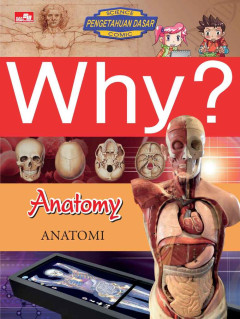
WHY ? Anatomy
WHY? Anatomy introduces young readers to the fascinating structure of the human body. The book explains how different organs and systems—such as the heart, lungs, muscles, and brain—work together to keep us alive and healthy. Through colorful illustrations, engaging facts, and simple explanations, readers learn about the skeleton, muscles, organs, and how the body functions in everyday l…
- Edition
- -
- ISBN/ISSN
- -
- Collation
- -
- Series Title
- -
- Call Number
- 2.500.0138.C.R
 Computer Science, Information & General Works
  Philosophy & Psychology
  Religion
  Social Sciences
  Language
  Pure Science
  Applied Sciences
  Art & Recreation
  Literature
  History & Geography