Filter by
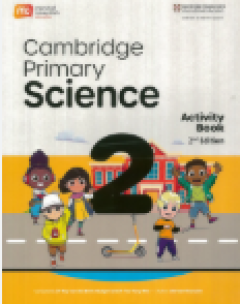
Cambridge Primary Science 2 Activity Book 2nd Edition
The Cambridge Primary Science Activity Book 2 Second Edition is the official write-in student workbook designed to complement the Stage 2 Student's Book (ages 7–8). Published by Cambridge University Press, this workbook is precisely mapped to the Cambridge Primary Science curriculum framework (0097). While the Student's Book introduces core concepts through shared inquiry, the Activity Boo…
- Edition
- -
- ISBN/ISSN
- -
- Collation
- -
- Series Title
- -
- Call Number
- 2.507.0130.C.R
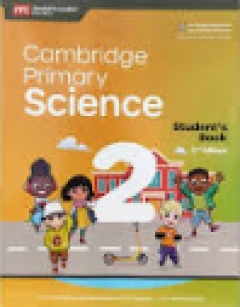
Cambridge Primary Science 2 Student's Book 2nd Edition
The Cambridge Primary Science Student's Book 2 Second Edition is the official, beautifully illustrated natural science textbook designed for young learners aged 7–8 (Stage 2). Published by Cambridge University Press, this updated volume is fully aligned with the Cambridge Primary Science curriculum framework (0097). As children transition into Stage 2, their natural curiosity deepens. This…
- Edition
- -
- ISBN/ISSN
- -
- Collation
- -
- Series Title
- -
- Call Number
- 2.507.0131.C.R

Cambridge Primary Science Activity Book Second Edition 1
The Cambridge Primary Science Activity Book 1 Second Edition is the essential hands-on companion workbook designed to accompany the Stage 1 Student's Book (ages 6–7). Published by Cambridge University Press, this workbook is fully tuned to the Cambridge Primary Science curriculum framework (0097). If the Student’s Book is where children look and learn, the Activity Book is where they do,…
- Edition
- -
- ISBN/ISSN
- -
- Collation
- -
- Series Title
- -
- Call Number
- 2.507.0123.C.R
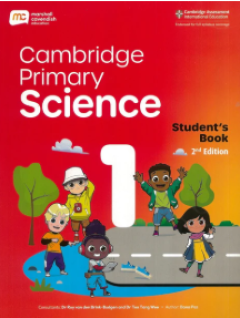
Cambridge Primary Science Student Book Second Edition 1
The Cambridge Primary Science Student's Book 1 Second Edition is the foundational natural science textbook designed for young learners aged 6–7 (Stage 1) entering the world of scientific discovery. Published by Cambridge University Press, this updated volume is fully aligned with the Cambridge Primary Science curriculum framework (0097). For a child in Stage 1, science is an active, sensor…
- Edition
- -
- ISBN/ISSN
- -
- Collation
- -
- Series Title
- -
- Call Number
- 2.507.0122.C.R
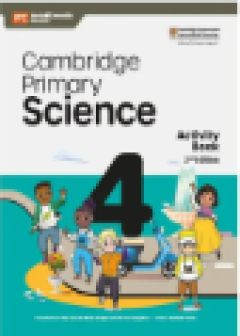
Cambridge Primary Science Activity Book Second Edition 4
In Stage 4, students transition from simply describing things to setting up fair tests and recording data accurately. The Activity Book is structured to guide students step-by-step through these skills: Scaffolded Exercises: Every lesson in the Student Book has a matching page in the Activity Book, divided into three levels of challenge: Focus (basic recall), Practice (applying concepts), an…
- Edition
- -
- ISBN/ISSN
- -
- Collation
- -
- Series Title
- -
- Call Number
- 2.507.0121.C.R
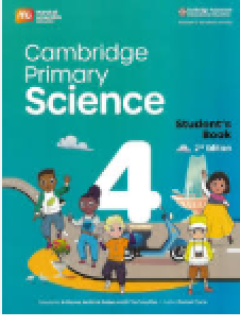
Cambridge Primary Science Student Book Second Edition 4
Stage 4 marks an important cognitive transition where children move from basic observation to structured, fair testing. The textbook introduces science as an ongoing process of questioning, modeling, and testing. Instead of just stating scientific facts, every unit explicitly integrates practical science skills: Predicting: Making data-driven guesses about what will happen. Fair Testin…
- Edition
- -
- ISBN/ISSN
- -
- Collation
- -
- Series Title
- -
- Call Number
- 2.507.0120.C.R
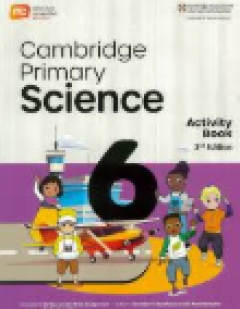
Cambridge Primary Science 6 Activity Book 2nd Edition
While the Learner's Book guides students through big ideas and hands-on classroom experiments, the Workbook is where they learn to think like true researchers. It focuses heavily on sharpening Thinking and Working Scientifically (TWS) skills. At this level, students aren't just filling in the blanks—they are learning how to evaluate data, isolate independent variables, identify patterns in re…
- Edition
- -
- ISBN/ISSN
- -
- Collation
- -
- Series Title
- -
- Call Number
- 2.507.0133.C.R
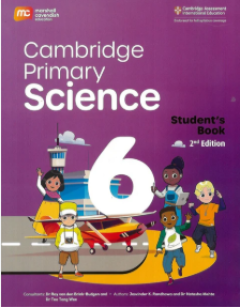
Cambridge Primary Science Student's Book 2nd Edition 6
The driving force behind this 2nd Edition is the Thinking and Working Mathematically and Scientifically (TWS) framework. At this level, science is taught not as a static collection of facts to memorize, but as a dynamic process of discovery. Stage 6 students are encouraged to step into the role of independent researchers—learning how to formulate testable hypotheses, isolate variables for fai…
- Edition
- -
- ISBN/ISSN
- -
- Collation
- -
- Series Title
- -
- Call Number
- 2.507.0117.C.R
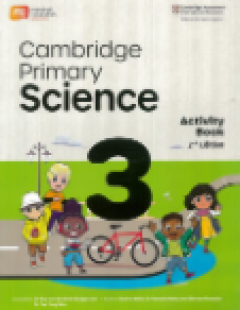
Cambridge Primary Science 3 Activity Book 2nd Edition
While the Learner's Book focuses on introducing big ideas and guiding students through hands-on experiments, the Workbook is where students learn to document, analyze, and process what they have discovered. It focuses heavily on developing Thinking and Working Scientifically (TWS) skills—teaching children how to properly record data, spot patterns, make predictions, and draw logical conclusio…
- Edition
- -
- ISBN/ISSN
- -
- Collation
- -
- Series Title
- -
- Call Number
- 2.507.0132.C.R
Cambridge Primary Science 3 Student's Book 2nd Edition
The core philosophy of the 2nd Edition revolves around the Thinking and Working Scientifically (TWS) framework. Right from the opening pages, the book moves away from passive reading and introduces students to the five primary types of scientific inquiry: research, fair testing, observing over time, pattern seeking, and identifying and classifying. Every chapter is packed with vivid, colorful …
- Edition
- -
- ISBN/ISSN
- -
- Collation
- -
- Series Title
- -
- Call Number
- 2.507.0132.C.R
 Computer Science, Information & General Works
  Philosophy & Psychology
  Religion
  Social Sciences
  Language
  Pure Science
  Applied Sciences
  Art & Recreation
  Literature
  History & Geography