Filter by
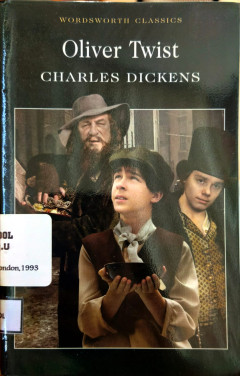
Oliver Twist
The story opens in a mid-19th-century English workhouse, where an impoverished young mother dies shortly after giving birth to an orphan boy, whom the parish beadle, Mr. Bumble, names Oliver Twist. Oliver spends the first nine years of his life in a poorly run juvenile farm, underfed and neglected, before being brought back to the workhouse.
- Edition
- -
- ISBN/ISSN
- -
- Collation
- -
- Series Title
- -
- Call Number
- 3.823.0086.B.U

The Tenant of Wildfell Hall
The story is framed as a series of letters from a prosperous young Yorkshire farmer, Gilbert Markham, to his friend, detailing the dramatic arrival of a mysterious, reclusive young widow who calls herself Helen Graham. She moves into the decaying, semi-abandoned Elizabethan mansion Wildfell Hall with her young son, Arthur, attempting to earn a living by selling her oil paintings. Because she…
- Edition
- -
- ISBN/ISSN
- -
- Collation
- -
- Series Title
- -
- Call Number
- 4.823.0294.B.U
The Collected Stories of
Bringing together 41 brilliant, deeply atmospheric tales set largely in the American South, this volume won the National Book Award. It showcases Welty's unmatched ear for regional dialogue, rich psychological depth, and compassionate, sharp-eyed observations of human eccentricity and isolation.
- Edition
- -
- ISBN/ISSN
- -
- Collation
- -
- Series Title
- -
- Call Number
- 4.823.0069.B.U
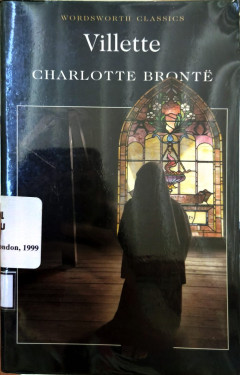
Villette
Villette is Charlotte Brontë’s final completed novel. Widely regarded as her psychological masterpiece, it is a semi-autobiographical bildungsroman (coming-of-age story) that draws heavily on Brontë's own experiences teaching in Brussels. It explores profound themes of isolation, unrequited love, female independence, and the inner resilience of a quiet, fiercely independent woman navigating…
- Edition
- -
- ISBN/ISSN
- -
- Collation
- -
- Series Title
- -
- Call Number
- 4.823.0489.B.U
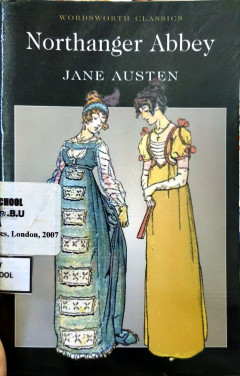
Northanger Abbey
The story follows Catherine Morland, a young, imaginative, and delightfully naive seventeen-year-old from a large, unpretentious family. Unlike the typical tragic heroines of gothic romances, Catherine is neither tragically poor nor uncommonly gifted; she simply loves reading gothic novels like Ann Radcliffe's The Mysteries of Udolpho. Invited by wealthy family friends, the Allens, to visit …
- Edition
- -
- ISBN/ISSN
- -
- Collation
- -
- Series Title
- -
- Call Number
- 4.823.0281.B.U
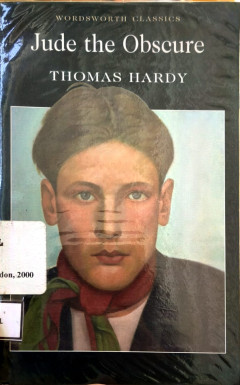
Jude the Obscure
Jude the Obscure is the final completed novel by Thomas Hardy. First published in serial form in 1894–1895 and released as a book in late 1895, it is widely considered one of the most powerful, bleak, and uncompromising tragedies in English literature. The novel launched a furious storm of Victorian moral outrage upon its release due to its raw critique of marriage, religion, institutional hy…
- Edition
- -
- ISBN/ISSN
- -
- Collation
- -
- Series Title
- -
- Call Number
- 4.823.0358.B.U
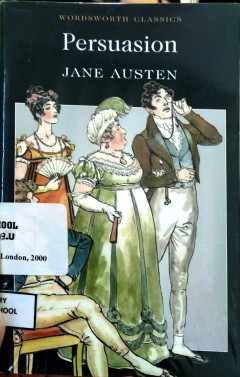
Persuasion
Persuasion is the final, fully completed novel by Jane Austen, published posthumously in 1818 alongside Northanger Abbey. Widely regarded as her most mature, autumnal, and deeply reflective work, the novel trades the youthful exuberance of Pride and Prejudice for a poignant exploration of regret, second chances, emotional maturity, and the quiet dignity of a woman navigating a changing society.
- Edition
- -
- ISBN/ISSN
- -
- Collation
- -
- Series Title
- -
- Call Number
- 4.823.0350.B.U

The Turn of the Screw & The Aspern Papers
The Turn of the Screw is a classic gothic horror/psychological thriller novella told through an unnamed first-person narrator (a young, inexperienced governess). It remains famous for its intense ambiguity—leaving readers to question whether the events are genuine supernatural hauntings or the products of a descending psychological madness
- Edition
- -
- ISBN/ISSN
- -
- Collation
- -
- Series Title
- -
- Call Number
- 4.823.0289.B.U

Twenty Years After
Twenty Years After (Vingt ans après) is the thrilling, politically charged sequel to Alexandre Dumas’s world-famous masterpiece The Three Musketeers. Set against the turbulent backdrop of the mid-17th century, the novel reunites the legendary heroes two decades later. While they have aged, matured, and taken divergent paths in life, they are inevitably drawn back together by loyalty, politic…
- Edition
- -
- ISBN/ISSN
- -
- Collation
- -
- Series Title
- -
- Call Number
- 4.823.0283.B.U
The Well of Loneliness
The Well of Loneliness is a landmark 1928 lesbian novel by British author Radclyffe Hall. It is widely considered the first and most famous explicitly lesbian novel in modern English literature. Upon its release, it became the center of a massive international obscenity trial and a fierce censorship battle. Despite its initial suppression, the novel broke decades of cultural silence, providing …
- Edition
- -
- ISBN/ISSN
- -
- Collation
- -
- Series Title
- -
- Call Number
- 4.823.0284.B.U
 Computer Science, Information & General Works
  Philosophy & Psychology
  Religion
  Social Sciences
  Language
  Pure Science
  Applied Sciences
  Art & Recreation
  Literature
  History & Geography