Filter by

The Turn of the Screw & The Aspern Papers
The Turn of the Screw is a classic gothic horror/psychological thriller novella told through an unnamed first-person narrator (a young, inexperienced governess). It remains famous for its intense ambiguity—leaving readers to question whether the events are genuine supernatural hauntings or the products of a descending psychological madness
- Edition
- -
- ISBN/ISSN
- -
- Collation
- -
- Series Title
- -
- Call Number
- 4.823.0289.B.U

Twenty Years After
Twenty Years After (Vingt ans après) is the thrilling, politically charged sequel to Alexandre Dumas’s world-famous masterpiece The Three Musketeers. Set against the turbulent backdrop of the mid-17th century, the novel reunites the legendary heroes two decades later. While they have aged, matured, and taken divergent paths in life, they are inevitably drawn back together by loyalty, politic…
- Edition
- -
- ISBN/ISSN
- -
- Collation
- -
- Series Title
- -
- Call Number
- 4.823.0283.B.U
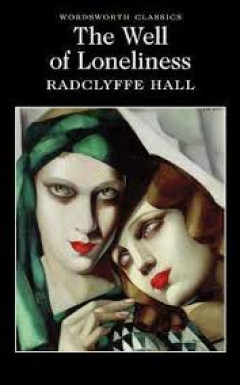
The Well of Loneliness
The Well of Loneliness is a landmark 1928 lesbian novel by British author Radclyffe Hall. It is widely considered the first and most famous explicitly lesbian novel in modern English literature. Upon its release, it became the center of a massive international obscenity trial and a fierce censorship battle. Despite its initial suppression, the novel broke decades of cultural silence, providing …
- Edition
- -
- ISBN/ISSN
- -
- Collation
- -
- Series Title
- -
- Call Number
- 4.823.0284.B.U
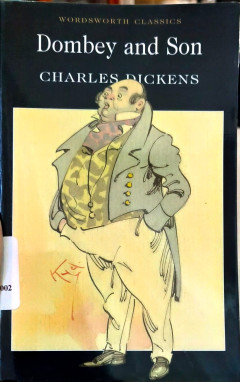
Dombey and Son
Dombey and Son (originally published under the lengthy title Dealings with the Firm of Dombey and Son: Wholesale, Retail, and for Exportation) is Charles Dickens’s seventh novel. Marking a major turning point in his literary career toward greater psychological depth and complex plotting, the novel is a scathing critique of corporate pride, unbridled capitalism, and emotional neglect within th…
- Edition
- -
- ISBN/ISSN
- -
- Collation
- -
- Series Title
- -
- Call Number
- 3.823.0297.B.U

The Old Curiosity Shop
The Old Curiosity Shop is Charles Dickens’s fourth novel, originally serialized in his weekly periodical Master Humphrey’s Clock. It became a massive, unprecedented cultural phenomenon in Victorian England, driving readers to frantic desperation as they awaited installments. Part gothic fairy tale, part picaresque journey, and part social satire, the novel contrasts innocent virtue against …
- Edition
- -
- ISBN/ISSN
- -
- Collation
- -
- Series Title
- -
- Call Number
- 4.823.0450.B.U

Mathilda & Other Stories
Mathilda & Other Stories (frequently published as Mathilda) is a collection showcasing the short fiction and lesser-known novellas of Mary Shelley, best known as the author of Frankenstein. Written shortly after Frankenstein and the tragic deaths of several of her children, Shelley's short fiction dives deep into Gothic conventions, psychological isolation, forbidden passions, and the supernatu…
- Edition
- -
- ISBN/ISSN
- -
- Collation
- -
- Series Title
- -
- Call Number
- 4.823.0496.B.U
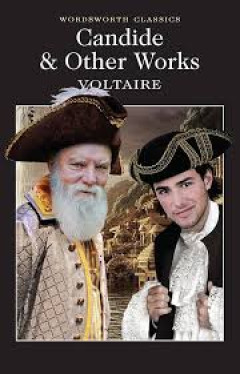
Candide and Other Works
Candide, ou l'Optimisme is the masterwork of the French Enlightenment philosopher Voltaire (François-Marie Arouet). Formatted as a conte philosophique (philosophical tale), it is a fast-paced, highly biting satire directed primarily against the philosophical optimism popularized by thinkers like Gottfried Wilhelm Leibniz—the notion that "all is for the best in this best of all possible world…
- Edition
- -
- ISBN/ISSN
- -
- Collation
- -
- Series Title
- -
- Call Number
- 3.823.0361.B.U
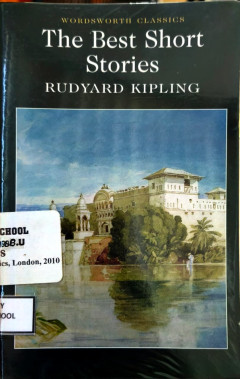
The Best Short Stories
Because "The Best Short Stories" can refer to several foundational anthologies—such as historic collections curated by editor Edward O'Brien or sweeping multi-author literature compendiums—it generally represents the pinnacle of compact narrative art. Rather than a single unified book, it encompasses the definitive short fiction of the 19th, 20th, and 21st centuries, capturing moments of pr…
- Edition
- -
- ISBN/ISSN
- -
- Collation
- -
- Series Title
- -
- Call Number
- 3.823.0488.B.U
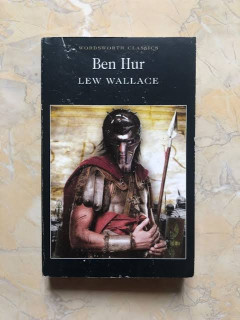
Ben Hur
Ben-Hur is an epic historical adventure novel written by General Lew Wallace. Upon its publication, it became an unprecedented bestseller, eventually surpassing Uncle Tom's Cabin as the best-selling American novel of the 19th century. Set primarily during the height of the Roman Empire against the backdrop of the early days of Christianity, the novel weaves a sweeping tale of betrayal, revenge,…
- Edition
- -
- ISBN/ISSN
- -
- Collation
- -
- Series Title
- -
- Call Number
- 4.823.0038.B.U
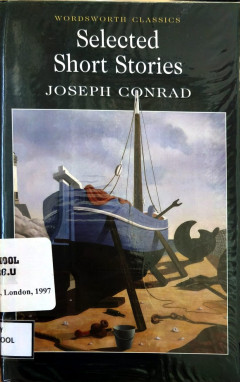
Selected Short Stories
Because "Selected Short Stories" is a title shared by many classic anthologies and single-author collections (such as those by H.G. Wells, Guy de Maupassant, Rabindranath Tagore, Virginia Woolf, or Saki), it generally serves as a gateway to the finest compact fiction of the 19th and 20th centuries. These collections span genres from psychological realism and social satire to early science ficti…
- Edition
- -
- ISBN/ISSN
- -
- Collation
- -
- Series Title
- -
- Call Number
- 4.823.0454.B.U
 Computer Science, Information & General Works
  Philosophy & Psychology
  Religion
  Social Sciences
  Language
  Pure Science
  Applied Sciences
  Art & Recreation
  Literature
  History & Geography