Filter by
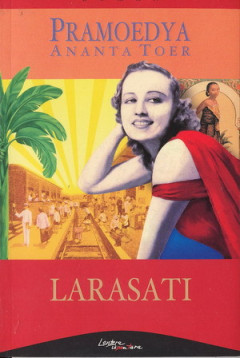
Larasati
Here is a formal academic abstract in English for Pramoedya Ananta Toer’s 1960 novel, Larasati, which shifts the perspective of the Indonesian National Revolution to the experiences of an artist on the front lines: Abstract Title: Art, Body, and Revolution: Female Agency and National Identity in Pramoedya Ananta Toer’s Larasati (1960) This abstract examines the intersection of gender…
- Edition
- -
- ISBN/ISSN
- -
- Collation
- -
- Series Title
- -
- Call Number
- 4.810.0027.B.U
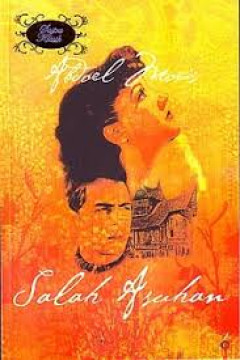
Salah Asuhan
This abstract analyzes the socio-cultural complexities of colonial society in the Dutch East Indies through Abdoel Moeis’ seminal 1928 novel, Salah Asuhan (Wrong Upbringing). Set during the height of the ethical policy era, the narrative follows Hanafi, a Western-educated Minangkabau man who undergoes legal European assimilation (gelijkgesteld), leading to deep psychological alienation and th…
- Edition
- -
- ISBN/ISSN
- -
- Collation
- -
- Series Title
- -
- Call Number
- 4.810.0021.B.U
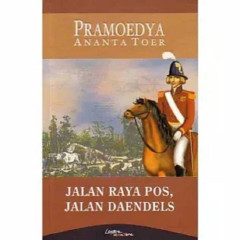
Jalan Raya Pos, Jalan Daendels
This abstract examines the construction and historical legacy of the Jalan Raya Pos (The Great Post Road), a 1,000-kilometer thoroughfare spanning the length of Java from Anyer to Panarukan. Commissioned in 1808 by Governor-General Herman Willem Daendels under the French-backed Batavian Republic, the road was conceived primarily as a strategic military defense asset to protect Java from British…
- Edition
- -
- ISBN/ISSN
- -
- Collation
- -
- Series Title
- -
- Call Number
- 4.810.0025.B.U

a life less ordinary Dari Gelap Kepada Terang
Here is a brief, formal abstract in English combining the concept of "a life less ordinary" (an extraordinary, unconventional journey) with the theme of Dari Gelap Kepada Terang (From Darkness to Light / Habis Gelap Terbitlah Terang): Abstract Title: A Life Less Ordinary: Navigating the Philosophical and Cultural Journey from Darkness to Light (Dari Gelap Kepada Terang) This abstract exp…
- Edition
- -
- ISBN/ISSN
- -
- Collation
- -
- Series Title
- -
- Call Number
- 4.810.0048.B.U
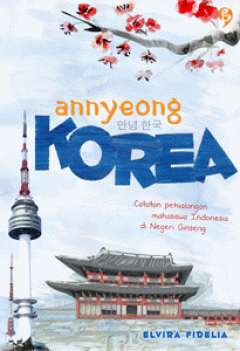
Annyeong Korea
Annyeong Korea is an engaging and comprehensive cultural guide designed to bridge the gap between Indonesian readers and the vibrant world of South Korea. Spurred by the global phenomenon of the Hallyu (Korean Wave), this book serves as an accessible roadmap for K-pop fans, K-drama enthusiasts, travelers, and students alike. It smoothly navigates the duality of South Korea—showcasing its ultr…
- Edition
- -
- ISBN/ISSN
- -
- Collation
- -
- Series Title
- -
- Call Number
- 3.810.0047.B.U
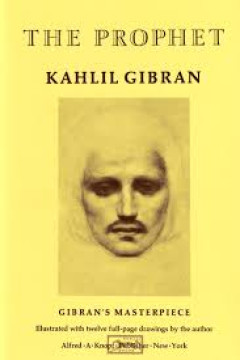
The Prophet
First published in 1923, The Prophet is a timeless masterpiece of philosophical fiction and prose poetry by Lebanese-American artist and philosopher Kahlil Gibran. The narrative follows a wise prophet named Almustafa, who has lived in the foreign city of Orphalese for twelve years and is finally about to board a ship to return to his homeland. Before he departs, a group of townspeople stops him…
- Edition
- -
- ISBN/ISSN
- -
- Collation
- -
- Series Title
- -
- Call Number
- 4.820.0001.B.U
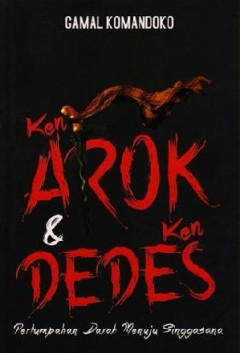
Ken Arok & Ken Dedes
The story of Ken Arok and Ken Dedes is a monumental historical epic from 13th-century Java, chronicled in the ancient Javanese text Pararaton (The Book of Kings). It details the meteoric rise of Ken Arok, a charismatic street thief and orphan of divine lineage, who transforms into the founder and first ruler of the Singhasari Kingdom. His destiny becomes inextricably linked with Ken Dedes, a wo…
- Edition
- -
- ISBN/ISSN
- -
- Collation
- -
- Series Title
- -
- Call Number
- 4.810.0002.B.U

PERANG BARATAYUDHA Perang Besar Pandawa dan Kurawa
The Baratayudha is the climactic, apocalyptic war in the Javanese shadow puppetry (wayang) tradition, adapted from the ancient Indian epic, the Mahabharata. It chronicles the ultimate 18-day fratricidal war fought on the sacred battlefield of Kurukshetra between two factions of the same royal lineage: the virtuous Pandavas (Pandawa) and their envious cousins, the Kauravas (Kurawa). The conflict…
- Edition
- -
- ISBN/ISSN
- -
- Collation
- -
- Series Title
- -
- Call Number
- 3.810.0031.B.U
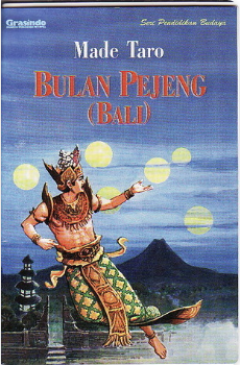
Bulan Pejeng (BALI)
The "Bulan Pejeng" (The Moon of Pejeng) is a colossal bronze kettle drum (nekara) housed in the Pura Penataran Sasih temple in Pejeng, Bali. Dating back to the Bronze-Iron Age (around 300 BC to AD 200) during the Dong Son culture era, it is renowned as the largest single-piece cast bronze kettle drum in the world, measuring over 1.8 meters in height. Shaped like an hourglass and adorned with in…
- Edition
- -
- ISBN/ISSN
- -
- Collation
- -
- Series Title
- -
- Call Number
- 4.810.0037.B.U
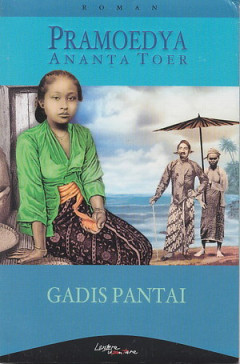
Gadis Pantai
Set in the early 20th century during the Dutch colonial era in Java, Gadis Pantai is a masterpiece that critiques the rigid, oppressive Javanese feudal system and its systemic subjugation of women. The story follows a beautiful fourteen-year-old girl from a poor fishing village, known only as Gadis Pantai (The Girl from the Coast). Her life is abruptly upended when she is chosen to become a ben…
- Edition
- -
- ISBN/ISSN
- -
- Collation
- -
- Series Title
- -
- Call Number
- 4.810.0028.B.U
 Computer Science, Information & General Works
  Philosophy & Psychology
  Religion
  Social Sciences
  Language
  Pure Science
  Applied Sciences
  Art & Recreation
  Literature
  History & Geography