Filter by
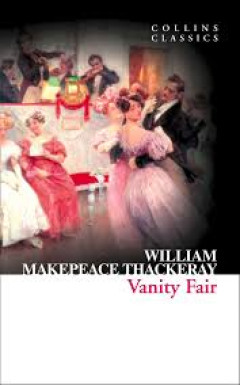
Vanity Fair
An impoverished, fiercely intelligent, and utterly ruthless orphan. Born to an artist father and a French opera dancer, Becky has no social standing or money, but she possesses immense charm, wit, and a burning ambition to climb to the top of British high society by any means necessary.
- Edition
- -
- ISBN/ISSN
- -
- Collation
- -
- Series Title
- -
- Call Number
- 4.823.0044.B.U
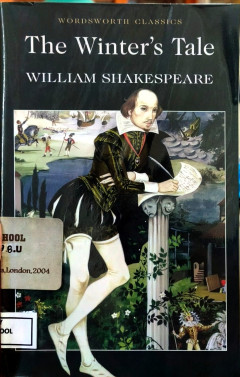
The Winter's Tale
The Winter's Tale is a late tragicomedy (or "romance") by William Shakespeare, written around 1610–1611. The play is famously divided into two distinct tonal halves: the first half is a dark, intense psychological tragedy set in Sicily, while the second half leaps forward 16 years into a pastoral, romantic comedy set in Bohemia, ultimately culminating in a miraculous, redemptive conclusion.
- Edition
- -
- ISBN/ISSN
- -
- Collation
- -
- Series Title
- -
- Call Number
- 3.823.0079.B.U
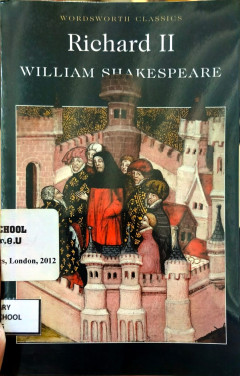
Richard II
Richard II is a history play by William Shakespeare, believed to have been written around 1595. It is the first play in Shakespeare's second historical tetralogy (often called the Henriad), which is followed by Henry IV, Part 1, Henry IV, Part 2, and Henry V. Unlike the action-packed battle scenes of later plays in the sequence, Richard II is a deeply lyrical, poetic, and psychological drama…
- Edition
- -
- ISBN/ISSN
- -
- Collation
- -
- Series Title
- -
- Call Number
- 3.823.0080.B.U
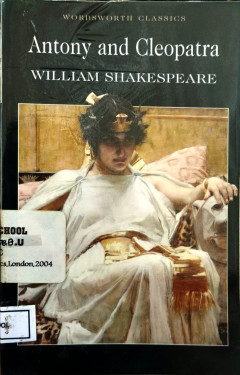
Antony and Cleopatra
One of Shakespeare’s grandest and most geographically sweeping tragedies, Antony and Cleopatra explores the colossal collision between duty and desire, East and West, and Roman political ambition against Egyptian passion. Set against the backdrop of the shifting Roman Empire, the play charts the legendary, turbulent romance of two of history's most magnetic figures as they face the inexorable…
- Edition
- -
- ISBN/ISSN
- -
- Collation
- -
- Series Title
- -
- Call Number
- 4.823.0078.B.U
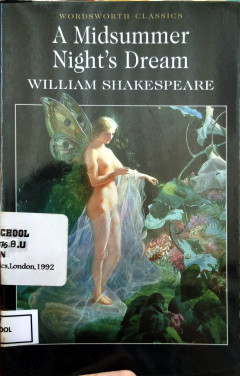
A Midsummer Night's Dream
The plot unfolds in the enchanted woods near Athens and centers on four young lovers—Hermia, Lysander, Helena, and Demetrius—who flee the city to escape a forced marriage. Once in the forest, they become pawns in a quarrel between Oberon, the King of the Fairies, and Titania, the Queen of the Fairies. Oberon instructs his mischievous servant, Puck, to use a magical flower whose juice can…
- Edition
- -
- ISBN/ISSN
- -
- Collation
- -
- Series Title
- -
- Call Number
- 4.823.0076.B.U
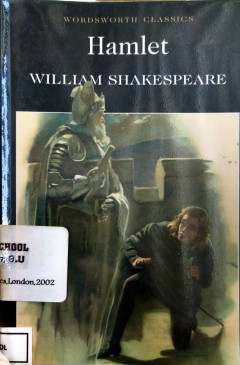
Hamlet
The story is set in the royal court of Denmark. Prince Hamlet is plunged into deep grief by the sudden death of his father, King Hamlet, and the shockingly hasty marriage of his mother, Queen Gertrude, to his uncle, Claudius. The tragedy kicks into gear when the ghost of the late king appears to Hamlet, revealing a horrifying truth: he was not killed by a snake bite as reported, but was murd…
- Edition
- -
- ISBN/ISSN
- -
- Collation
- -
- Series Title
- -
- Call Number
- 3.823.0077.B.U
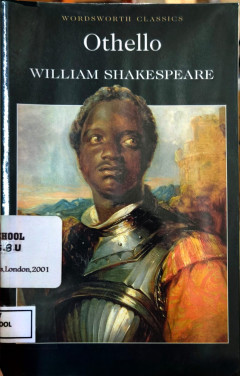
Othello
Othello (fully titled The Tragedy of Othello, the Moor of Venice) is a tragedy written by William Shakespeare around 1603. Widely regarded as one of his most intense and tightly wound masterpieces, the play is a devastating exploration of toxic jealousy, systemic racism, manipulation, and the fragility of trust. Set against the backdrop of military conflict between Venice and the Ottoman Emp…
- Edition
- -
- ISBN/ISSN
- -
- Collation
- -
- Series Title
- -
- Call Number
- 3.823.0085.B.U

Henry IV Parts 1 and 2
Written and performed around 1596–1598, Henry IV, Parts 1 and 2 form the dramatic centerpieces of William Shakespeare’s second historical tetralogy (flanked by Richard II and Henry V). Universally acclaimed as among Shakespeare’s greatest artistic achievements, the two plays brilliantly fuse high-stakes political history with low-comedy tavern life, exploring the burdens of kingship, rebe…
- Edition
- -
- ISBN/ISSN
- -
- Collation
- -
- Series Title
- -
- Call Number
- 4.823.0083.B.U
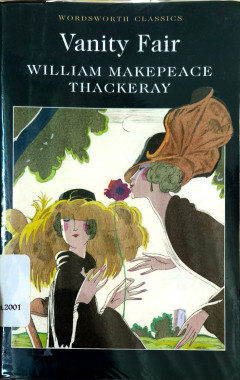
Vanity Fair
Vanity Fair: A Novel Without a Hero is a classic satirical masterpiece written by English author William Makepeace Thackeray and originally published in monthly serialized installments between 1847 and 1848. Set against the backdrop of the Napoleonic Wars, the novel takes its title from John Bunyan's The Pilgrim's Progress—representing a metaphorical town where spiritual emptiness, materialis…
- Edition
- -
- ISBN/ISSN
- -
- Collation
- -
- Series Title
- -
- Call Number
- 4.823.0044.B.U
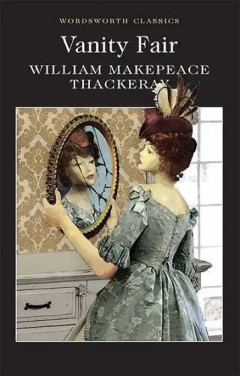
Vanity Fair
Vanity Fair: A Novel Without a Hero is a classic satirical masterpiece written by English author William Makepeace Thackeray and originally published in monthly serialized installments between 1847 and 1848. Set against the backdrop of the Napoleonic Wars, the novel takes its title from John Bunyan's The Pilgrim's Progress—representing a metaphorical town where spiritual emptiness, materialis…
- Edition
- -
- ISBN/ISSN
- -
- Collation
- -
- Series Title
- -
- Call Number
- 4.823.0044.B.U
 Computer Science, Information & General Works
  Philosophy & Psychology
  Religion
  Social Sciences
  Language
  Pure Science
  Applied Sciences
  Art & Recreation
  Literature
  History & Geography