Filter by
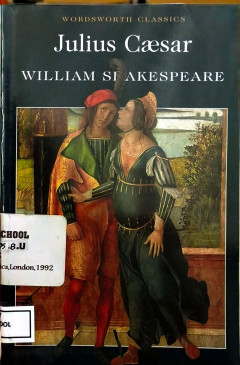
Julius Caesar
One of Shakespeare's most celebrated Roman historical plays, Julius Caesar is a gripping political thriller that explores ambition, corruption, manipulation, loyalty, and the chaotic aftermath of assassination. Rather than focusing entirely on Caesar himself, the play primarily centers on the moral turmoil of his friend and assassin, Brutus.
- Edition
- -
- ISBN/ISSN
- -
- Collation
- -
- Series Title
- -
- Call Number
- 3.823.0075.B.U
Tom Sawyer Abroad & Tom Sawyer Detective
Tom Sawyer Abroad (1894) and Tom Sawyer, Detective (1896) are two lesser-known sequel novellas written by Mark Twain. Unlike the classic novels The Adventures of Tom Sawyer and Adventures of Huckleberry Finn, these short adventures swap the Mississippi River for wild, globe-trotting spectacle and small-town crime-solving, all narrated from the perspective of Huck Finn.
- Edition
- -
- ISBN/ISSN
- -
- Collation
- -
- Series Title
- -
- Call Number
- 3.823.0051.B.U
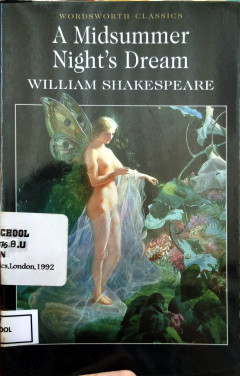
A Midsummer Night's Dream
The plot unfolds in the enchanted woods near Athens and centers on four young lovers—Hermia, Lysander, Helena, and Demetrius—who flee the city to escape a forced marriage. Once in the forest, they become pawns in a quarrel between Oberon, the King of the Fairies, and Titania, the Queen of the Fairies. Oberon instructs his mischievous servant, Puck, to use a magical flower whose juice can…
- Edition
- -
- ISBN/ISSN
- -
- Collation
- -
- Series Title
- -
- Call Number
- 4.823.0076.B.U
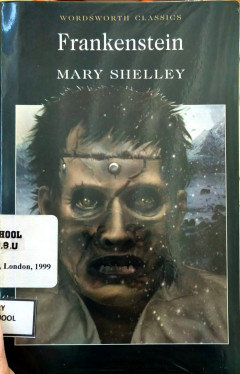
Frankenstein
Frankenstein is Mary Shelley’s masterwork, written when she was just eighteen years old and published anonymously in 1818. Widely regarded as the world’s first true science fiction novel, it fuses Gothic horror with profound philosophical inquiry. The novel explores the ethical boundaries of science, the nature of creation and monstrosity, parental responsibility, and the destructive power …
- Edition
- -
- ISBN/ISSN
- -
- Collation
- -
- Series Title
- -
- Call Number
- 3.823.0063.B.U

Twenty Thousand Leagues Under the Sea
Twenty Thousand Leagues Under the Sea (Vingt mille lieues sous les mers) is a classic science fiction adventure novel written by French author Jules Verne and published in serialized form between 1869 and 1870. Widely regarded as a masterpiece of speculative fiction, the novel anticipated many modern technologies—such as advanced submarines and deep-sea diving gear—long before they were inv…
- Edition
- -
- ISBN/ISSN
- -
- Collation
- -
- Series Title
- -
- Call Number
- 3.823.0046.B.U
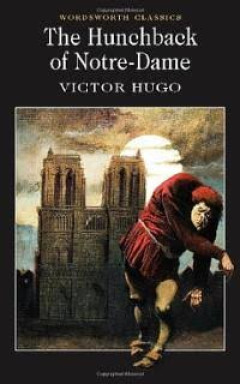
The Hunchback of Notre-Dame
he Hunchback of Notre-Dame (Notre-Dame de Paris) is a monumental Gothic historical novel written by French author Victor Hugo and published in 1831. Set in late 15th-century Paris during the reign of Louis XI, the novel is a sweeping, deeply atmospheric tragedy that blends vivid medieval history, architectural philosophy, and social critique.
- Edition
- -
- ISBN/ISSN
- -
- Collation
- -
- Series Title
- -
- Call Number
- 4.823.0040.B.U
Lady Susan and Other Works
Lady Susan and Other Works is a compelling collection that brings together Jane Austen’s earliest experiments in fiction (her "juvenilia"), her completed early short epistolary novel, and the fragments of novels she left unfinished. While her famous "big six" novels (Pride and Prejudice, Emma, etc.) cemented her legacy, this collection offers a fascinating look at the sharper, wilder, and mor…
- Edition
- -
- ISBN/ISSN
- -
- Collation
- -
- Series Title
- -
- Call Number
- 4.823.0292.B.U

The Man in the Iron Mask
The Man in the Iron Mask is not actually a standalone novel, but rather the final, thrilling segment of Alexandre Dumas’s massive epic, The Vicomte de Bragelonne (which itself is the third and final installment of the Three Musketeers saga, following The Three Musketeers and Twenty Years After). Set in the 1660s during the early reign of the young, vain, and absolute monarch King Louis XIV…
- Edition
- -
- ISBN/ISSN
- -
- Collation
- -
- Series Title
- -
- Call Number
- 4.823.0037.A.U

The Return of Sherlock Holmes
Published in 1905, this collection of 13 short stories is one of the most famous in detective fiction history. It marks the momentous event readers had clamored for a decade to see: Sir Arthur Conan Doyle bringing Sherlock Holmes back from the dead. Having killed off his detective in 1893’s "The Final Problem," public pressure (and a handsome financial incentive) forced Doyle to resurrect Ho…
- Edition
- -
- ISBN/ISSN
- -
- Collation
- -
- Series Title
- -
- Call Number
- 4.823.0091.B.U
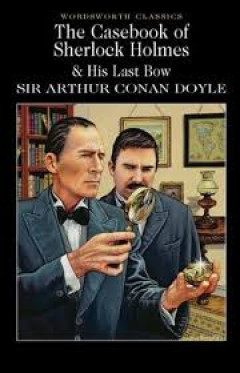
The Casebook of Sherlock Holmes & His Last Bow
His Last Bow and The Case-Book of Sherlock Holmes are the final two collections of Sherlock Holmes short stories written by Sir Arthur Conan Doyle. Together, they represent the later years of Holmes's publication history, capturing a darker, more experimental tone as Doyle looked back on his famous detective's career.
- Edition
- -
- ISBN/ISSN
- -
- Collation
- -
- Series Title
- -
- Call Number
- 4.823.0034.B.U
 Computer Science, Information & General Works
  Philosophy & Psychology
  Religion
  Social Sciences
  Language
  Pure Science
  Applied Sciences
  Art & Recreation
  Literature
  History & Geography