Filter by
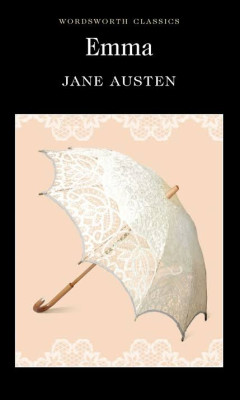
Emma
Emma is a classic comedy of manners and social commentary written by English author Jane Austen and published in 1815. Set in the fictional, isolated village of Highbury during the Regency era, the novel follows a clever, wealthy, and self-deluded young woman who fancies herself an expert matchmaker, only to repeatedly misread the hearts and motives of the people around her.
- Edition
- -
- ISBN/ISSN
- -
- Collation
- -
- Series Title
- -
- Call Number
- 4.823.0045.B.U
Les Miserables Volume Two
Les Misérables (Volume Two): Cosette is the second part of French author Victor Hugo's monumental masterpiece, published in 1862. Following the dark, urban poverty and tragic downfall of Fantine in the first volume, this section shifts its focus to the passage of time, a dramatic religious sanctuary, a legendary historical battle, and the quiet emergence of young love.
- Edition
- -
- ISBN/ISSN
- -
- Collation
- -
- Series Title
- -
- Call Number
- 4.823.0043.B.U
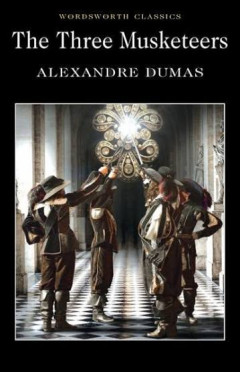
The Three Musketeers
The Three Musketeers (Les Trois Mousquetaires) is a classic historical adventure novel written by the French author Alexandre Dumas (in collaboration with Auguste Maquet) and published in 1844. Set primarily between 1625 and 1628, it follows the thrilling exploits of a young, ambitious hero as he joins the elite royal bodyguard and crosses paths with high-stakes political intrigue. Though it…
- Edition
- -
- ISBN/ISSN
- -
- Collation
- -
- Series Title
- -
- Call Number
- 3.823.0068.B.U
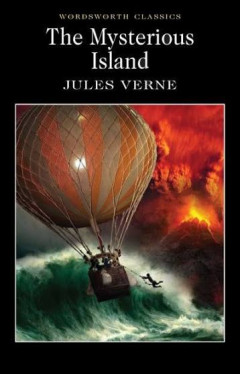
The Mysterious Island
The story begins during the American Civil War in 1865, when a small group of Union prisoners escapes from Richmond, Virginia, by hijacking a hot-air balloon. The daring escapees include the brilliant engineer and leader Cyrus Smith, his loyal former slave Neb, the sailor Pencroff, the young orphan Harbert, and the journalist Gideon Spilett, accompanied by Pencroff's dog, Top. A ferocious hu…
- Edition
- -
- ISBN/ISSN
- -
- Collation
- -
- Series Title
- -
- Call Number
- 3.823.0060.B.U
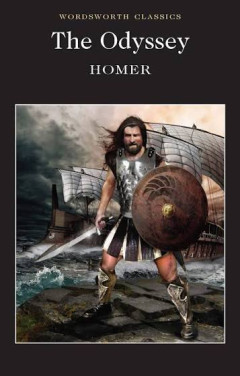
The Odyssey
The Odyssey is an ancient Greek epic poem attributed to the poet Homer, composed likely in the late 8th century BCE. Written in dactylic hexameter, it is one of the foundational pillars of Western literature. Following the events of The Iliad, the epic tells the legendary, ten-year journey home of Odysseus, King of Ithaca, after the fall of Troy. While The Iliad is a tragedy of war, The Odys…
- Edition
- -
- ISBN/ISSN
- -
- Collation
- -
- Series Title
- -
- Call Number
- 3.823.0050.B.U
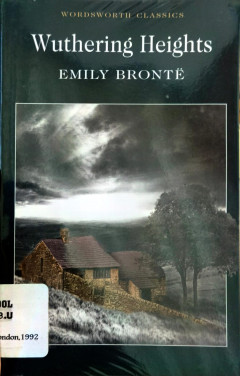
Wuthering Heights
Wuthering Heights is Emily Brontë’s only novel, originally published under the male pseudonym Ellis Bell. Today, it is considered a masterwork of English literature and a towering classic of Gothic and psychological fiction. Set against the bleak, stormy Yorkshire moors, the novel breaks away from traditional Victorian polite society to explore all-consuming passion, destructive obsession, s…
- Edition
- -
- ISBN/ISSN
- -
- Collation
- -
- Series Title
- -
- Call Number
- 3.823.0049.B.U
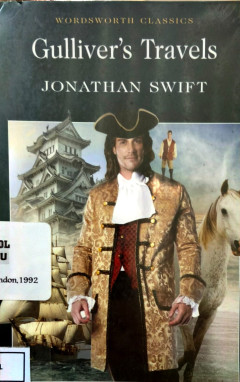
Gulliver's Travels
Gulliver's Travels (originally titled Travels into Several Remote Nations of the World. In Four Parts. By Lemuel Gulliver, First a Surgeon, and then a Captain of Several Ships) is a masterpiece of satirical literature written by the Anglo-Irish author Jonathan Swift and published in 1726. Disguised as a conventional, highly detailed travel memoir, the book is actually a fierce, biting satire…
- Edition
- -
- ISBN/ISSN
- -
- Collation
- -
- Series Title
- -
- Call Number
- 3.823.0066.B.U
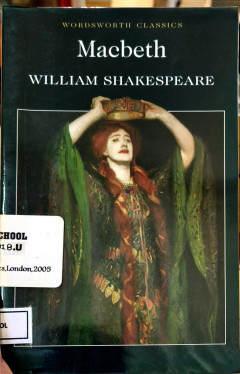
Macbeth
Macbeth is a tragedy written by William Shakespeare around 1606. Often referred to by superstitious theater actors simply as "The Scottish Play," it is Shakespeare's shortest and darkest tragedy. Set in medieval Scotland, the play is a terrifying psychological exploration of ambition, guilt, paranoia, and the corrupting nature of absolute power.
- Edition
- -
- ISBN/ISSN
- -
- Collation
- -
- Series Title
- -
- Call Number
- 4.823.0081.B.U
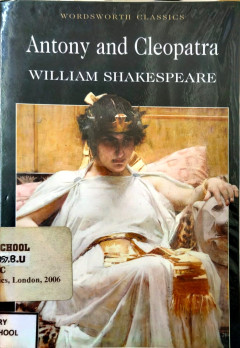
Anthony and Cleopatra
Antony and Cleopatra is a tragedy written by William Shakespeare around 1606–1607. Widely regarded as one of his most expansive and politically complex plays, it spans the vast geography of the ancient Mediterranean—moving fluidly between Rome and Alexandria—to tell the legendary, tumultuous love story of the Roman triumvir Mark Antony and the Egyptian Queen Cleopatra.
- Edition
- -
- ISBN/ISSN
- -
- Collation
- -
- Series Title
- -
- Call Number
- 4.823.0357.B.U

Journey to the Centre of the Earth
Journey to the Centre of the Earth (Voyage au centre de la Terre) is a classic science fiction adventure novel by the pioneering French author Jules Verne. Renowned for its blend of rigorous 19th-century scientific curiosity and high-stakes exploration, the novel is a foundational text in the "lost world" and subterranean adventure genres, inspiring generations of explorers and science fiction …
- Edition
- -
- ISBN/ISSN
- -
- Collation
- -
- Series Title
- -
- Call Number
- 3.823.0056.B.U
 Computer Science, Information & General Works
  Philosophy & Psychology
  Religion
  Social Sciences
  Language
  Pure Science
  Applied Sciences
  Art & Recreation
  Literature
  History & Geography